
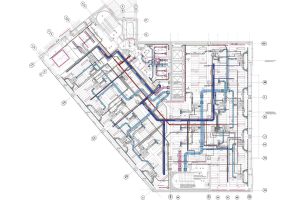
Key Components Air Handling Units (AHUs): Central units that condition and distribute air.
Ducts: Channels that transport air from the AHU to different areas.
Registers, Grills, Vents and Diffusers: Openings that allow air to enter rooms.
Filters: Remove contaminants from the air to improve indoor air quality.
Dampers: Control airflow within the ducts.
Fans: Ensure proper air circulation.
Design Considerations Layout: Plan duct routes to minimize bends and pressure loss.
Sizing: Ensure ducts are appropriately sized for the required airflow.
Material: Choose durable materials like galvanized steel or aluminium.
Energy Efficiency: Optimize system design to reduce energy consumption.
Types of Air Distribution Systems
1. Ducted Systems
2. Ductless Systems
3. Zone Systems
4. Constant Volume Systems (CV): Deliver a constant airflow at all times, regardless of the cooling or heating load.
5. Variable Air Volume Systems (VAV): Adjust the airflow based on the load, providing more precise temperature control and energy efficiency.
6. Radiant Systems: Use surfaces like floors or ceilings to radiate heat or cool air into the space.
7. Hybrid Systems: Combine different types of systems to optimize performance and efficiency.