
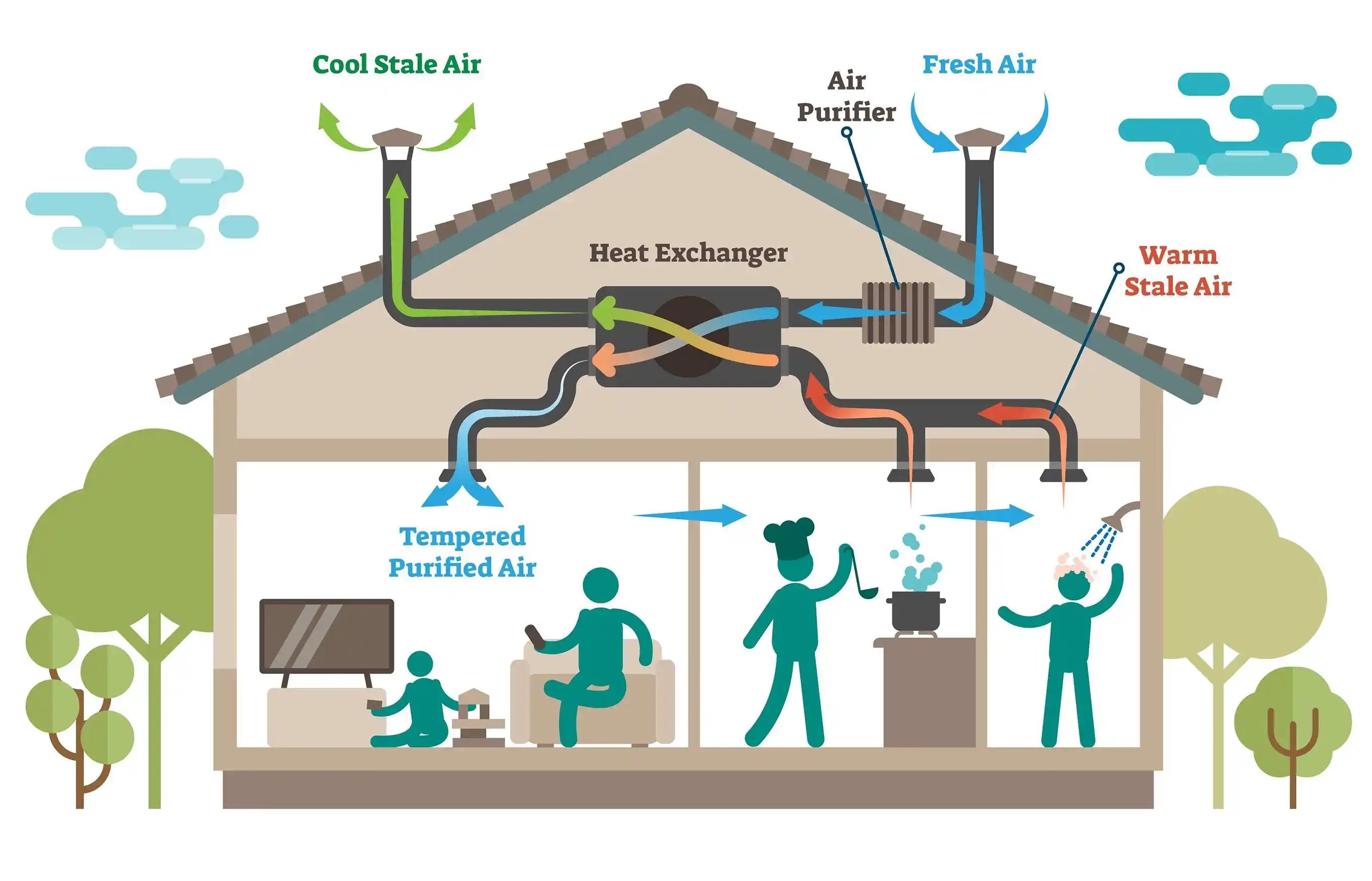
1.Basic Components:
1.1 Heating System: – Furnaces – Boilers – Heat Pumps
1.2 Cooling System: – Air Conditioning – Evaporative Cooling – Chillers
1.3 Ventilation System: – Exhaust Fans – Supply Fans – Air Handling Units (AHUs)
1.4 Key Concepts:
a) Thermodynamics: Heat transfer, temperature, and humidity.
b) Psychometrics: Study of air properties (temperature, humidity, enthalpy).
c) Fluid Mechanics: Fluid flow, pressure, and velocity.
d) Heat Transfer: Conduction, convection, radiation.
2. HVAC Cycle:
2.1 Compression
2.2 Condensation
2.3 Expansion
2.4 Evaporation
3. Refrigerants:
3.1 Types: Halogenated, non-halogenated.
3.2. Properties: Boiling point, freezing point, density.
4. HVAC Systems:
4.1. Split Systems
4.2. Package Units
4.3 Central Systems
4.4. Zoning Systems
5. Control Systems:
5.1. Thermostats
5.2. Sensors
5.3. Relays
5.4 Controllers
6. Safety Considerations:
6.1. Electrical Safety
6.2. Gas Safety
6.3. Refrigerant Handling
6.4. Fall Protection
7. Troubleshooting:
7.1. Identifying Issues
7.2. Diagnostic Tools
7.3. Repair Techniques
8. Best Practices:
8.1. Regular Maintenance
8.2. Energy Audits
8.3. Commissioning
8.4. Proper Installation